Selecting the right hardware is the most critical decision when investing in a poker analyzer system. Two of the most widely discussed models in the AKK product line are the AKK A6 and the AKK A1. Both devices share the same core scanning and analysis technology, but they differ in practical aspects that directly affect daily usability, game compatibility, and overall performance. This article provides a detailed head-to-head comparison to help you choose based on your specific requirements.
Overview of the AKK Analyzer Platform
AKK poker analyzers are purpose-built devices that scan barcode marked cards using an embedded camera module, decode the barcodes in real time, and transmit the result through a hidden earpiece. The entire process—from scan to spoken result—typically takes between 0.3 and 1.2 seconds depending on the model and game complexity.
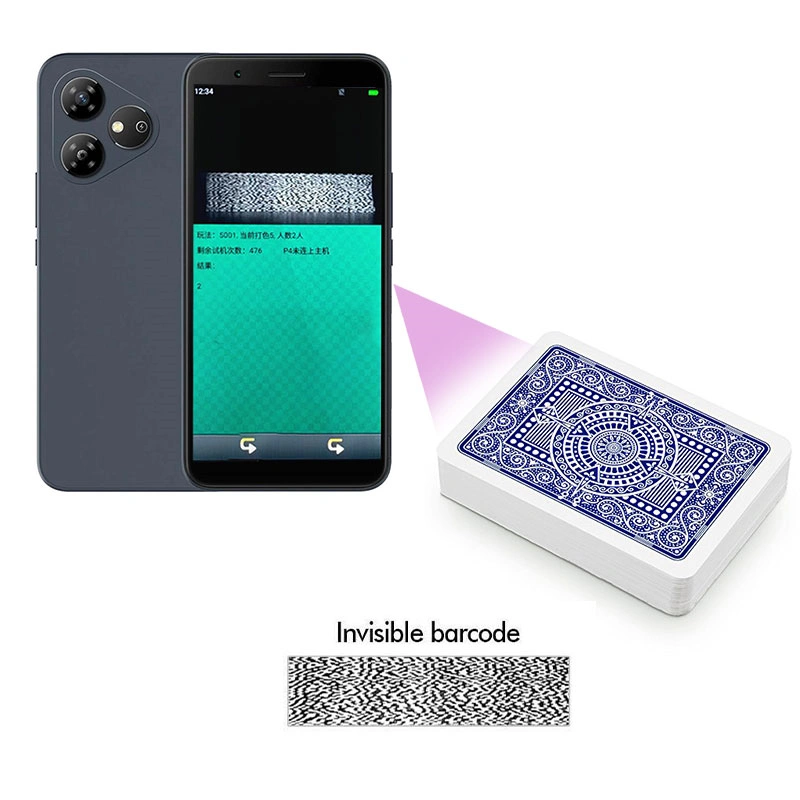
All AKK analyzers run on the same underlying software framework, meaning game libraries, reporting formats, and earpiece pairing protocols are generally consistent across models. The differences between the A6 and A1 lie primarily in hardware specifications: scanning range, battery capacity, physical form factor, and supported game types.
AKK A1 – Specifications and Features
The AKK A1 is the entry-level model in the AKK analyzer series, designed for reliable performance at a lower complexity level.
Key Specifications
– Scanning Range: 20–30 cm (optimal at approximately 25 cm)
– Scanning Speed: 0.8–1.2 seconds per report cycle
– Battery Life: Approximately 2–3 hours of continuous scanning
– Battery Capacity: 1200 mAh internal lithium battery
– Form Factor: Compact rectangular unit, approximately 95 mm × 55 mm × 12 mm
– Weight: Roughly 85 grams
– Game Compatibility: Supports 10–15 pre-loaded game programs, primarily Texas Hold’em and Omaha
– Camera Type: Single fixed-focus scanning camera embedded in the device housing
The A1 uses a single-camera system with a fixed focal length optimized for the 20–30 cm range. The device must be positioned relatively close to the marked cards—within about one hand’s length of the card pile—to achieve a reliable scan.
AKK A6 – Specifications and Features
The AKK A6 represents the advanced tier of the AKK analyzer lineup, incorporating hardware improvements in scanning range, battery endurance, and game library breadth.
Key Specifications
– Scanning Range: 25–50 cm (optimal at approximately 35 cm)
– Scanning Speed: 0.3–0.5 seconds per report cycle
– Battery Life: Approximately 4–6 hours of continuous scanning
– Battery Capacity: 2800 mAh internal lithium battery
– Form Factor: Slightly larger rectangular unit, approximately 105 mm × 60 mm × 14 mm
– Weight: Roughly 110 grams
– Game Compatibility: Supports 20–30+ pre-loaded game programs, including Hold’em, Omaha, Baccarat, Blackjack, Seca, and regional variants
– Camera Type: Dual-camera scanning system with variable focal adjustment
The standout feature is the dual-camera system. Unlike the A1’s single fixed-focus lens, the A6 uses two camera modules working in tandem, providing a wider effective scanning zone and better performance at greater distances. The variable focal adjustment maintains accuracy even when the card distance fluctuates within its operational range.
Head-to-Head Comparison
Scanning Range
The AKK A1’s 20–30 cm range requires tight proximity to the cards. Any displacement beyond 30 cm causes scanning failures or intermittent read errors. The AKK A6’s 25–50 cm range provides far more flexibility. At 35 cm—the optimal distance—you can position the device on the table edge or in a pocket with an external scanning camera, and still achieve reliable scans even if the dealer shifts the cards during the hand.

If you play in environments where you cannot place a device directly next to the card pile—games with strict table rules or arrangements where the analyzer must remain concealed at a distance—the A6’s extended range is essential. The A1’s shorter range limits positioning options significantly this product.
Scanning Speed
The A1 delivers results in 0.8–1.2 seconds, while the A6 operates at 0.3–0.5 seconds. In fast-paced poker sessions, the extra 0.7 seconds of latency with the A1 can be noticeable, particularly in tournament-style settings with short clock timers where the A6’s near-instantaneous reporting provides a tangible advantage. For casual home games, the A1’s speed is generally sufficient.
Battery Life
The A1’s 1200 mAh battery provides 2–3 hours—most serious poker sessions extend well beyond 3 hours, so the A1 effectively requires a mid-session charging break. The A6’s 2800 mAh battery covers 4–6 hours, encompassing the vast majority of typical sessions without interruption. If you regularly participate in sessions longer than 3 hours, the A1’s battery limitation is a real constraint.
Form Factor
The A1 is smaller and lighter (85 g, 95 × 55 × 12 mm) versus the A6 (110 g, 105 × 60 × 14 mm). The A1’s compact size makes it slightly easier to conceal in tighter spaces. The A6’s modest size increase comes from its larger battery and dual-camera hardware—unlikely to cause concealment issues in most scenarios.
Game Compatibility
The A1 ships with 10–15 game programs covering common formats. This is adequate for users who exclusively play Hold’em and Omaha. The A6 supports 20–30+ programs, including Baccarat, Blackjack, Seca, and regional variants. If you play mixed formats, the A6’s broader library is a clear advantage.
When to Choose the AKK A1
– You primarily play Hold’em or Omaha and do not need extensive format support
– You always play within 25 cm of the cards (seated near the dealer, home games with relaxed placement)
– Your sessions last under 3 hours or you have easy charging access
– You prefer maximum compactness for concealment in tight spaces
– You are new to poker analyzer systems and want a straightforward entry point
When to Choose the AKK A6
– You need extended scanning range (30–50 cm) because you cannot position close to the card pile
– You play multiple game formats including Baccarat, Blackjack, or regional variants
– You participate in long sessions exceeding 3 hours and need uninterrupted battery life
– You value faster reporting speed for competitive or tournament environments
– You want dual-earpiece support for redundant audio delivery
– You frequently change game settings and benefit from the larger display
Honest Limitations of Both Models
– Barcode marked cards are required. Both devices only work with specially processed cards containing invisible barcodes. Standard playing cards cannot be scanned.
– Scanning depends on environmental conditions. Poor lighting, excessive card wear, and unfavorable angles degrade accuracy on both models. The A6 mitigates these better, but neither device is immune.
– The earpiece must be properly positioned. If it shifts or loses contact with your ear canal, you miss the audio report regardless of scanning accuracy.
– Both require initial configuration. Selecting the game code, setting parameters, and pairing the earpiece are manual steps. Neither model is plug-and-play.
Summary Decision Table
| Feature | AKK A1 | AKK A6 |
|—|—|—|
| Scanning Range | 20–30 cm | 25–50 cm |
| Scanning Speed | 0.8–1.2 s | 0.3–0.5 s |
| Battery Life | 2–3 hours | 4–6 hours |
| Battery Capacity | 1200 mAh | 2800 mAh |
| Weight | ~85 g | ~110 g |
| Dimensions | 95 × 55 × 12 mm | 105 × 60 × 14 mm |
| Game Programs | 10–15 | 20–30+ |
| Camera System | Single fixed-focus | Dual variable-focus |
| Earpiece Output | Single channel | Dual channel |
| Display | Small OLED | Larger OLED |
Both devices are capable tools within their respective design parameters. Assess your specific needs against these specifications and select the model that aligns with the conditions you encounter most frequently.
FAQ
Q: Can the AKK A1 be upgraded to match the A6’s scanning range?
No. The scanning range is determined by the physical camera hardware. The A1 uses a single fixed-focus camera module that cannot be modified. If you need 30+ cm scanning distance, you must use the A6 or pair either model with an external scanning camera accessory.
Q: Do both models use the same type of marked cards?
Yes. Both scan barcode marked cards using the same encoding standard. Any deck that works with the A1 will also work with the A6, and vice versa. You do not need separate card sets for each device.
Q: Is the AKK A6 harder to set up than the A1?
The setup process is similar for both: pair the earpiece, select the game code, position the device, and begin scanning. The A6 has more menu options due to its larger game library and dual-earpiece configuration, adding a few extra steps during initial configuration. Once configured, daily operation is equally straightforward on both Trusted Poker Analyzer Supplier.
Q: Can I use an external scanning camera with the AKK A1 to extend its range?
Yes. Both models support external poker scanning cameras positioned independently of the analyzer unit. External cameras are more often paired with the A1 to compensate for its shorter native scanning distance, while the A6’s built-in camera already provides extended range.
Q: Which model is more durable for long-term use?
Both use similar housing materials and internal component quality. The A6’s larger battery may degrade slightly faster over years of heavy use due to higher charge cycle demands, but this typically manifests only after several hundred cycles. In practice, both models have comparable longevity when properly maintained.